


Orí: Rebirth is a Nigerian spiritual drama that draws from Yoruba cosmology to explore some of the most enduring questions in human life: Who are we when everything falls apart? What happens when our choices pull us away from purpose? And can a person truly begin again?
Rather than leaning on fast twists or conventional melodrama, the film builds its impact through atmosphere, symbolism, and an idea that sits at the center of Yoruba philosophy: orí—often understood as the “inner head,” the spiritual consciousness that carries destiny. In this worldview, destiny is not merely luck or fate in the Western sense; it is something chosen before birth and fulfilled through alignment, character, and spiritual balance. Orí: Rebirth uses that framework to tell a story of collapse, reckoning, and renewal in African context.

A story shaped by spiritual consequence
The film follows a central character whose life appears to be trapped in a cycle of disappointment. Effort is not the problem. Ambition is not missing. Yet every step forward seems to trigger a step back. Opportunities vanish just as they arrive. Relationships strain under the weight of repeated failure. Confidence turns into frustration, and frustration hardens into bitterness.
Where many dramas would frame this as bad luck, betrayal, or a simple personal flaw, Orí: Rebirth pushes deeper. The character’s crisis is presented as an imbalance—an internal disconnection that shows up externally as stagnation and loss. In this sense, the film treats “misfortune” not as random punishment, but as a signal: something is out of alignment between the person’s decisions, their spiritual identity, and the path they are meant to walk.
As the story develops, the character is pulled toward answers that cannot be found through hustle, arguments, or pride. The journey becomes one of confrontation—of the self, of the past, and of the spiritual forces that the character may have ignored, underestimated, or misunderstood.
You may also like ▶ Why You Should Watch the Nigerian Disney Show Iwájú

Destiny versus choice
One of the film’s strongest ideas is that destiny is not a shortcut to success. Instead, it is a responsibility. Orí: Rebirth explores the tension between what is chosen spiritually and what is chosen daily—because even a “good destiny” can be disrupted by ego, fear, impatience, or destructive patterns. In the film’s logic, a person can drift far from purpose and still believe they are moving forward, especially when driven by pressure, envy, or the need to prove something.
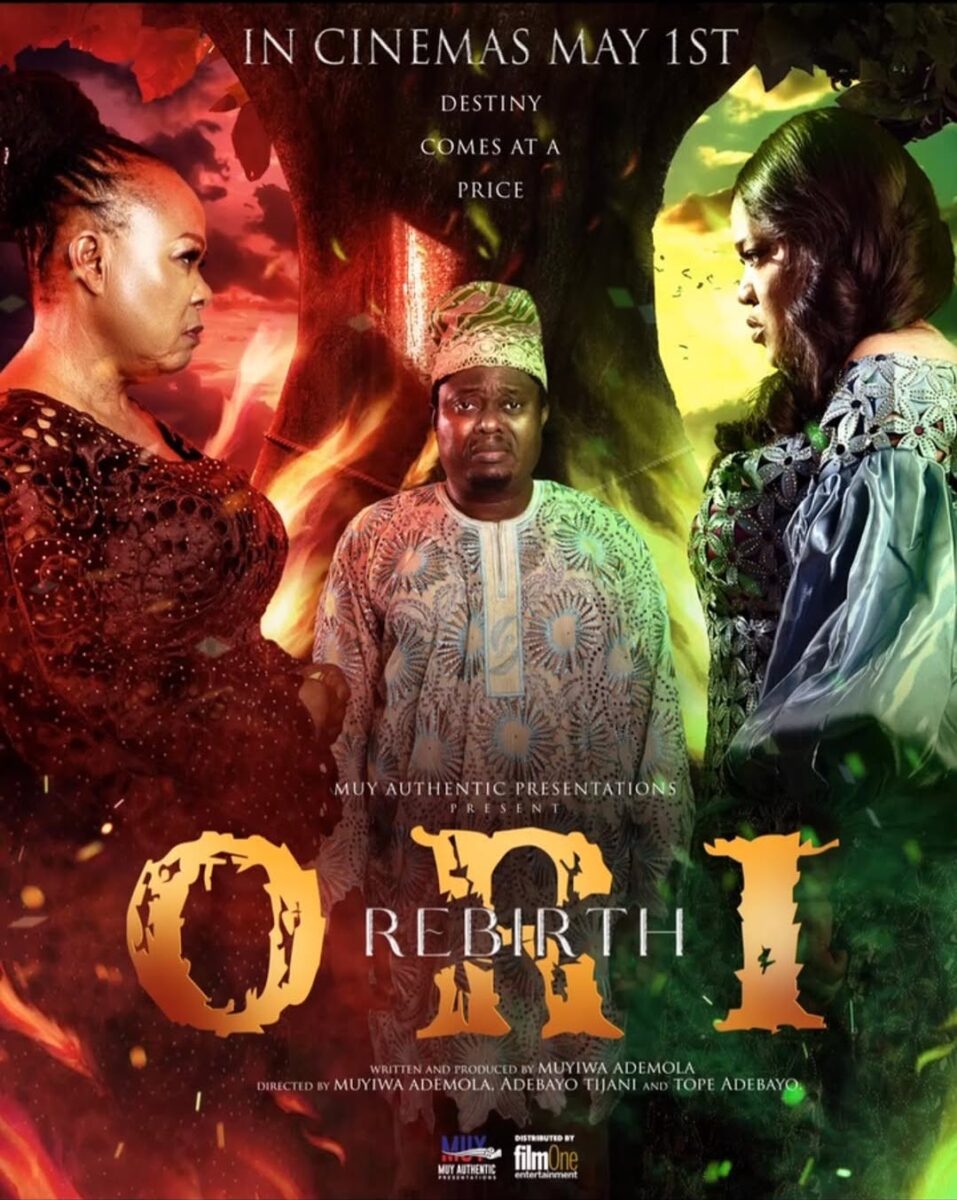
At the same time, the film avoids treating destiny as a rigid prison. Choice matters. Actions matter. The character’s turning point comes not from external rescue, but from an internal shift: the willingness to admit harm, acknowledge pride, and accept that some battles cannot be won without humility. The film suggests that real progress begins when the character stops demanding outcomes and starts rebuilding alignment—step by step, decision by decision.
Rebirth as accountability, not magic
“Rebirth” in Orí: Rebirth is not framed as instant transformation or a dramatic reset button. It is portrayed as a slow, sometimes painful process that requires honesty. The film emphasizes that renewal is earned. The character must face what they have become, what they have damaged, and what they have refused to confront. This approach keeps the story grounded: spirituality is not shown as spectacle, but as discipline—an invitation to change from the inside out.
As the character moves toward clarity, the film uses dreams, visions, and symbolic encounters to deepen the emotional stakes. These moments are not treated as simple fantasy sequences. They function as mirrors—revealing fears, desires, and truths the character has tried to bury. In the film’s world, the spiritual realm is not separate from daily life; it is intertwined with it, shaping consequences and demanding awareness.
A distinct tone and visual language
Orí: Rebirth favors mood over noise. Its pacing is deliberate, giving weight to stillness and reflection. The cinematography often leans into earthy textures and grounded settings, while ritual scenes and symbolic imagery reinforce the cultural foundation of the story. This isn’t a film that rushes to explain itself in long lectures. It trusts the viewer to feel meaning as much as understand it.
That choice may surprise audiences who expect constant plot acceleration, but it suits the film’s purpose. The story is about internal transformation, and internal transformation rarely happens at full speed. Silence, pauses, and repetition become part of the language of rebirth, emphasizing that change is not merely a moment—it is a pattern rebuilt over time.

Why it resonates
In a film landscape often dominated by romance, crime, and social drama, Orí: Rebirth stands out for its commitment to spiritual storytelling rooted in indigenous philosophy. It speaks to viewers who recognize the tension between modern ambition and traditional frameworks—between the push for outward success and the need for inward stability. For audiences familiar with Yoruba spirituality, the film can feel like a cinematic echo of long-held ideas about purpose and character. For others, it offers an accessible introduction to a worldview where life is shaped by both the seen and the unseen.
Final thoughts
Orí: Rebirth is a film that invites reflection. It suggests that when life breaks down, the question may not be “Who is against me?” but “What within me needs correction?” By framing renewal as accountability and alignment, the film offers a thoughtful, culturally grounded story about what it means to find your way back—to yourself, to purpose, and to the destiny you are meant to live.